Article: Why Luxury Doesn’t Have to Be Expensive
Why Luxury Doesn’t Have to Be Expensive
When people hear the word “luxury,” price often comes to mind first. Some luxury handbags cost hundreds or thousands of dollars, while some designer sneakers command high prices in part because of their brand recognition. But price does not tell the whole story.
People commonly associate luxury products with characteristics such as craftsmanship, quality, design, exclusivity, heritage, and the materials used to make them. Price can form part of that equation, but it is not the only characteristic worth examining. So, if you are trying to understand whether a product offers something beyond its price tag, what should you actually look for?
What Actually Makes Something Luxurious?
There is no single feature that automatically makes a product luxurious. People commonly associate luxury with a combination of characteristics, including product quality, design, craftsmanship, scarcity or exclusivity, and brand heritage. This makes the product itself an important place to start.
Consider materials. The material used in a handbag, shoe, or accessory can affect its appearance, texture, construction, and durability. Different materials also require different methods of manufacturing and care. Craftsmanship matters for a similar reason. Constructing a product can require specialized knowledge and techniques, from assembling individual components to finishing details that affect the final result.
Design also plays a role. A distinctive silhouette, unusual construction, or recognizable design language can give a product an identity beyond its basic function. Heritage can add another layer of context. A company with decades of experience in a particular type of product may have developed specialized knowledge, techniques, and design traditions over time.

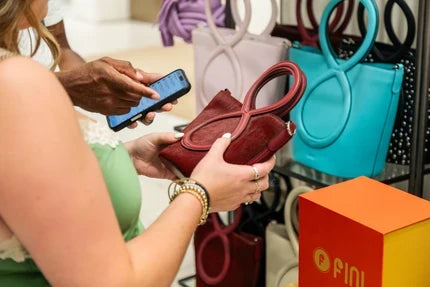
Fini Brand provides one example of why these details are worth examining. Fini describes its handbags as featuring Italian lamb leather, lamb leather linings, premium hardware, and individual hand construction. Those details give shoppers concrete characteristics to consider alongside the brand name and price.
None of these characteristics guarantees that a particular product is worth its price, but they give shoppers concrete factors to examine. The price of a product tells you how much it costs; the product itself can tell you what you are paying for. A brand name can add another layer of information, particularly when it represents a documented history and established expertise.
What Does a Famous Brand Name Actually Tell You?
A famous brand name can provide useful information. An established company may have a documented history, recognizable design language, specialized expertise, or a particular reputation within its industry. Those factors can matter when evaluating a product.
Coach is a useful example. Founded in New York in 1941 by six artisans, Coach began with a focus on leather goods and has built its identity around leather craftsmanship and American design. The company’s own history describes its evolution from a family-run leather-goods company into an internationally recognized fashion house. Its current company materials also discuss leather sourcing, artisanal techniques, and quality standards.

That history can add context to a purchase from an established brand. A brand name can connect a product to a particular history, design approach, or area of expertise. But the brand name cannot answer every practical question. It cannot tell you whether a particular handbag is large enough for what you carry, whether its shape works with your wardrobe, whether you prefer its material, or whether you will use the bag often enough to make the purchase worthwhile. Those questions require you to examine the individual product.
The same evaluation applies to products from smaller or independent designers. A lesser-known brand is not automatically better, just as a famous brand is not automatically worse. The useful comparison comes from examining what each product actually offers.
Beyond the Brand Name
Independent designers and smaller brands can build products around distinctive materials, specialized craftsmanship, unusual designs, or particular manufacturing traditions. For someone looking for unique designer handbags, the useful questions remain the same: What is the bag made from? How is it constructed? What makes the design distinctive? How practical is it? How often will it be used?
The same approach applies to shoppers exploring Black-owned designers or affordable Black-owned handbags. The category itself does not determine the quality or value of an individual product. Materials, construction, design, and price still need to be considered. Looking beyond the most recognizable names does not mean dismissing established brands; it simply gives shoppers more products to compare.
New York offers a useful example of this broader fashion landscape. The city’s fashion environment includes major fashion houses alongside independent designers, vintage clothing, streetwear, emerging labels, and everyday clothing. This mix shows how different approaches to fashion can exist alongside one another without requiring every piece in a wardrobe to carry the same name.
Coach itself describes its identity through its New York roots, including the influence of designer Bonnie Cashin and the city’s approach to color, proportion, and design. A wardrobe can therefore combine a recognizable designer handbag with vintage clothing, pair premium sneakers with everyday basics, or place an independent designer alongside an established fashion house. Individual pieces do not have to come from the same brand to work together, which makes personal style another factor in deciding what is worth buying.
Luxury Isn't Just About Handbags
You can apply the same characteristics used to evaluate a handbag to footwear. Luxury designer sneakers, for example, offer materials, construction, design, finishing, and intended use that shoppers can examine. The logo is one part of the product, but it does not describe the entire product.
Footwear can occupy different price ranges while still involving specialized materials or distinctive designs. That makes shoes another useful category for applying the same framework. Rather than focusing only on the name attached to a pair, shoppers can look at how the shoes are made and how well they fit their intended use.
That creates room for alternatives to luxury designer sneakers that shoppers can evaluate according to the same criteria. What materials does the shoe use? What construction methods does the manufacturer use? Is the design distinctive? Is it comfortable enough to wear regularly? Does the construction suit the way you plan to use the shoe? These questions can tell you more about the product than simply asking whether a sneaker carries a luxury logo.

Fini’s footwear provides another example of how shoppers can apply this framework outside handbags. Rather than evaluating a pair of shoes solely by its brand name or price, a shopper can examine its materials, construction, design, and intended use to determine whether it fits their needs. The same principle applies across fashion: looking at the product before looking at the label provides a clearer picture of what you are actually buying.
How to Evaluate Affordable Luxury
Once price and brand recognition are no longer the only considerations, evaluating a product becomes much more practical. Start with the materials. Identify what the product is made from and consider whether those materials suit how you intend to use it. For leather goods, look at the type of leather and how the manufacturer describes it. For footwear, consider the upper, lining, sole, and other components. Materials also matter in relation to use, since a material selected for appearance may have different characteristics from one chosen for durability or flexibility.
Next, examine the construction. Look at the details that hold the product together. For a handbag, that can include stitching, seams, handles, straps, closures, and hardware. For footwear, it can include the construction of the upper and sole. The more you understand about how a product comes together, the easier it becomes to compare products on something more meaningful than price.
Fini’s products illustrate why this information can be useful. When a product description identifies materials, construction methods, hardware, or manufacturing details, shoppers have specific information they can use when comparing that product with others. That information does not automatically make one product better than another, but it can make the comparison more informed.
Then look at the design. A higher price does not automatically make a design better. Instead, consider what the design accomplishes. Is the silhouette distinctive? Does it serve a practical purpose? Can it work with different outfits? Does it suit a particular occasion or regular use?
Finally, consider how you will actually use the product. A product that rarely leaves your closet may provide less practical value than one you use regularly. A less expensive product may ultimately prove more useful if it becomes a reliable part of your wardrobe. Versatility can therefore play an important role in a purchasing decision, particularly when comparing products at different price points.
Price still matters, but you should consider it alongside everything else. An expensive product is not automatically a better product, and an inexpensive product is not automatically a better value. The more useful approach is to understand what you are paying for and then decide whether those characteristics justify the price.
Why the Right Luxury Product Is Different for Everyone
Shoppers can compare many product characteristics objectively, but they do not all place the same value on those characteristics. One person may care most about leather quality, while another may prioritize craftsmanship. Someone else may care about a particular design, a brand’s history, versatility, or comfort.
That does not make the underlying product characteristics meaningless. It means their importance can vary from one shopper to another. There is no universal price at which a product becomes worthwhile, just as there is no single characteristic that guarantees that a product will be valuable to every buyer.
The better approach is to understand the product first and then decide which of its characteristics matter most to you. That allows you to compare an established luxury house with an independent designer, a handbag with a pair of sneakers, or a higher-priced product with a more affordable alternative using the same basic framework.
Find Your Version of Luxury
Luxury does not have to come down to a price tag. Materials, craftsmanship, construction, design, heritage, exclusivity, and practical usefulness can all contribute to the value of a product, while a famous brand can add history and identity without answering every question about the individual item.
Fini Brand is one example of a company applying this broader approach to footwear and accessories. Its products incorporate several of the characteristics discussed throughout this article, including materials, craftsmanship, construction, and distinctive design. Fini also describes its pricing approach as attainable.
Explore Fini Brand’s collection to find footwear and accessories that bring craftsmanship and distinctive design into your everyday wardrobe.